Counting polyamorists who count: Prevalence and definitions of an under-researched form of consensual nonmonogamy
Abstract
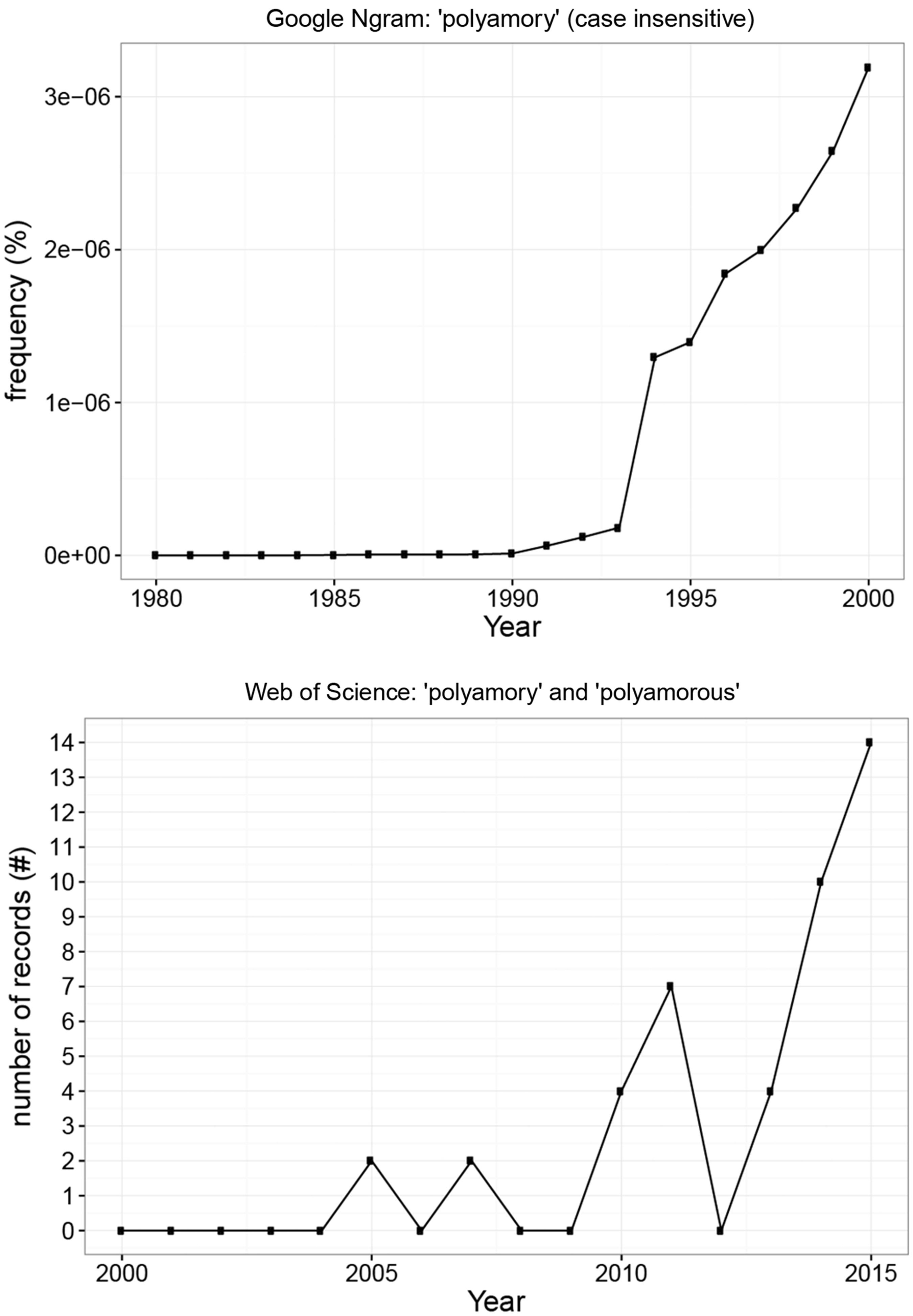
Despite a growing interest in polyamory, it is unknown how many polyamorists there are in the general population. In acknowledging that the meaning of ‘polyamory’ is contested (e.g. Klesse, 2014), we estimated the prevalence of polyamory when it was defined as: (1) an identity, (2) relationship beliefs/preferences, (3) relationship status, and (4) relationship agreements. We recruited 972 individuals from Mechanical Turk and used a sample weighting procedure to approximate a representative sample of the United States population. Point prevalence estimates ranged from about 0.6% to 5%, and lifetime estimates ranged from about 2% to 23%. Thus, we estimate that there are at least 1.44 million adults in the USA who count as polyamorous.
Topics: Online Research, Demographics, Sexuality, Consensual Non-Monogamy
Important figure
- Rubel, A. N., & Burleigh, T. J. (2018). Counting polyamorists who count: Prevalence and definitions of an under-researched form of consensual nonmonogamy. Sexualities, 23(1–2), 3–27. 10.1177/1363460718779781